Iloilo Chinese New Year Celebration


It was the Jesuit priests of Santa Maria Parish that incorporated Chinese Family Ancestral Rites as part of the liturgy of the Holy Mass. However, during the celebration of the Chinese New Year Mass, not only the ancestral rites are done by the Chinese Family Associations, but colorful Chinese ethnic dances are performed during mass offerings.

In 2002, a formidable but visionary lady, in the person of Mrs. Fanny Lao Uy, president of theIloilo Multi-Sectoral Business Organization, Inc. invited the then newly installed Chief Executive of the City of Iloilo, Mayor Jerry P. Treñas to attend the Chinese New Year Mass at the Santa Maria Parish, to show the City Mayor how the Ilonggo Chinoys celebrate the Spring Festival or the Chinese New Year.

Mrs. Uy saw this celebration as a venue for introducing the Chinese culture to the Ilonggo community. She was so inspired by the way fellow Chinoys celebrate the coming of the Lunar New Year, that she saw this to be an opportunity to strengthen the ties between the Chinoys and their brother Ilonggos.

With the help of the Sta. Maria Parish priest, Fr. Manuel Uy, SJ, Mrs. Fanny Uy, and two local prominent Chinoy business organizations, the Filipino Chinese Chamber of Commerce of Iloilo, Inc. (FCCCII) and the Federation of Filipino Chinese Chamber of Commerce of Panay, Inc. (FFCCCPI), the Hon. Jerry P. Treñas, initiated a city-wide celebration of the Chinese New Year making it the very first celebration of its kind outside Metro Manila. He created an ad hoc task force which was later named as Task Force Chinese New Year. The Honorable Mayor wrote a letter of invitation on January 16, 2003, requesting the FCCCII, FFCCCPI, the Filipino-Chinese community, and the Chinese-Filipino schools to help in the first Chinese New Year Celebration of the City of Iloilo. It was also during this momentous affair that the City Government would publicly recognize the efforts of Chinoy organizations and Chinoy Ilonggos who have made contributions to make Iloilo City better and more culturally attractive.

Iznart Street of Iloilo City was chosen as the first venue of the celebration because it is where one will find most of the stores of the Chinoy retail businessmen. This street is known to the “locals” as Chinatown, just like Ongpin Street in Manila. Thus, Iznart was spruced up, decorations were put up, and all the stores cooperated by hanging authentic Chinese lanterns to signify and welcome the lunar year celebration.

In 2003, three schools participated in the program. These were the Iloilo Central Commercial High School, Iloilo Sun Yat Sen High School, and the Santa Maria Catholic School, now known as Ateneo de Iloilo Santa Maria Catholic School. To lend a more festive atmosphere, the Task Force invited the Iloilo Hotel, Restaurants & Resorts Association (IHRRA), an organization affiliated with IMSBOI to complete the celebration with a Chinese Food Festival. A variety of authentic Chinese cuisine was offered, so that one can buy and/or eat tikoy, sio pao, sio mai, oh chian, oh ke, chay taw ke, kim kuy ke, lo mi, ma mi, lum pia, ma chang, kiam pheng and also savor the hot and spicy makee. And to the delight of the Ilonggos, the celebration ended with a fantastic fireworks display, which is a traditional way of welcoming the lunar new year.

Because the 2003 celebration seemed to have attained a degree of success, Mayor Jerry Treñas again initiated a similar celebration by calling the Task Force Chinese New Year to convene in preparation for the coming of the Year of the Monkey in 2004.

It was in 2005, however, when Mayor Jerry Treñas thought of expanding the Task Force Chinese New Year into a formal association, still with the FCCCII, FFCCCPI and IMSBOI as pioneer members. The organization was called the Iloilo Chinese-Filipino Cultural Association (ICFCA). The president of FFCCCPI then was Mr. Henry Chusuey who became its first chairman; while the president of FCCCII, Mr. Felipe Uygongco, became the first Vice Chairman. All Chinoy Family Associations were also requested to participate.

The task of providing cultural presentations was, however, given both to FCCCII and FFCCCPI. This decision came about because both organizations manage and own two prominent educational institutions in the City of Iloilo. FCCCII is the founder of the Iloilo Central Commercial High School, and FFCCCPI is the founder of Iloilo Sun Yat Sen High School.

It was also decided that both organizations shall host and anchor the annual celebration alternately.

In the succeeding years, the Chinese New Year celebrations were greatly anticipated by everyone. As the Ilonggos await the Kasadyahan and Dinagyang Festivals, Chinoys and Pinoys also await with similar degrees of excitement the colorful surprises of the Chinese New Year.

It is very heartwarming to remember that throughout the years of the celebrations of the lunar new year, from 2006 up to the present, world class pyrotechnics displays being sponsored through the years by SM City Iloilo, and “live bands” playing up to the wee hours of the morning, gave a fitting culmination to the cultural presentations.

Likewise, it is noteworthy to mention that in 2007, Bacolod City in Negros Occidental, also introduced “Bacolaodiat”, a similar celebration of the Chinese New Year in their City.

From a vision of one dynamic businesswoman was born a cultural event that is now considered as one of the major tourist attractions in the City of Iloilo. The Chinese New Year is an event that celebrates the cultural diversity of the Chinese Ilonggos; and even without the aid of a “Chinese astrologer,” both Chinoys and Pinoys believe that “the celebration of the Lunar New Year, ‘Chun Chiat,’ or Spring Festival in the City of Iloilo is here to stay.” Its magnitude and color may vary from year to year, but the celebration will be one that every Ilonggo will look forward to. Moreover, its underlying message of peace and happiness for family members, friends, and the community will definitely continue, because this celebration is beyond politics, religion, family or business association, or racial roots.

The Iloilo Chinese New Year is a grand celebration for everyone!

(an excerpt from the News Today)
photos used in this article is owned by Hawili Hurom*
*photos are posted with permission from the owner

Iloilo Film Festival in time with the 2011 Dinagyang festival celebrations


Selected independent films will be shown during Iloilo City's week-long Dinagyang Festival 2011.

This was announced by City Mayor Jed Patrick Mabilog after he met with Undersecretary Briccio Santos, chairman of the Film Development Council of the
Philippines under the Office of the President on Tuesday, November 30, to finalize the plan of holding the Iloilo Film Festival on January 19-21, 2011, in time for the Dinagyang celebration.

Santos said the Iloilo Film Festival is in celebration of the first Sineng Pambansa to be held at SM City cinemas. All the films are full length and have been previewed, screened and recognized in competitions and film festivals abroad. However, they have not yet been shown in any local or national theaters or cinema houses.

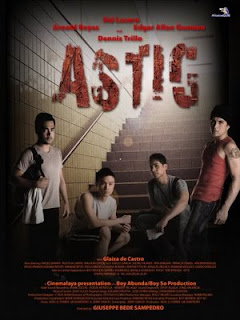
The 12 films available for viewing are "Halaw," "Red Shoes," "Lola," "Emir," "Donor," "Enkuentro," "Bakal Boys," "Kano," "Astig" and "Himpapawid (Manila Skies)".

“Yanggaw” by Richard Somes is the sole Ilonggo feature included in the film fest.

Santos said the Film Development Council came to be through Republic Act 9167, which seeks to set and establish a national film archive made by Filipino filmmakers and to develop and promote locally produced films that meet international standards.

The country's premier actors among them are Coco Martin in "Astig" (directed by Giuseppe Bede Sampedro) and Rosanna Roces in "Lola" (helmed by premier director Brillante Mendoza).

On the other hand, Mabilog said that the selection of Iloilo City to host the film festival is a manifestation of national filmmakers' awareness that culture and movies are alive in Iloilo.

Iloilo has several independent filmmakers and directors of. Among these are lawyer Joenar Pueblo, Oskie Nava, Kevin Piamonte and the late Quin Baterna.

Mabilog said he is happy to note that the University of the Philippines Visayas has recently been producing short indie films in the local dialect Hiligaynon to showcase the moral values, tradition and culture of the Ilonggos.

The UPV indie film producers are also expected to showcase their works during the Dinagyang Festival.


Tigkaralag Festival


Pavia, Iloilo, Philippines - October 28, 29, and 30, 2010
“A festival like no other. The only one of its kind.” Catchphrases coined by the writer in describing this unique festival started in 1991 by then Pavia municipal councilor and later 2nd District Board Member Cecilia H. Capadosa.

The term TIGKARALAG is a “karay-a” or local dialect word that loosely translates to season/time (TIG) of soul/s (KALAG) and refers to the observance of the All Saints’ and All Souls’ Days that fall on the 1st and 2nd days of November respectively.

This festival started as a local version of the western celebration of Halloween 19 years ago. It originally started on the evening of the 31st of October but was later moved to the evening of the 30th of the month to give the participants and audiences alike the time to give due respect and observance of the All Saints’ Day and All Souls’ Day that immediately follow the original date.

Its humble beginnings consisted of group of children dressed and made up as otherworldly characters and creatures performing in the Pavia municipal plaza to the delight of the hometown audience. The group who has the most impressive presentation then wins packs of candies and corn snacks.

Today, the participating groups represent a specific barangay of the town and are mostly composed of teenagers. They compete in a dance-drama with a storyline reflective of the TIGKARALAG. The choreography, music, costumes and makeup now are not only designed to scare and impress but are purposely done to help convey the message – that death is inevitable and good always triumph over evil. The most creative performers win a big cash prize and the honor of being proclaimed the year’s champion.

With TIGKARALAG Festival, the human mind is the only limit when it comes to imagination.

*(photos & article were officially sent to Experience Iloilo for posting).

Contributed by DEXTER G. DIZON, RN, MPG

He is a former three-termer Pavia councilor, a Registered Nurse, has a post-grad degree of Master in Public Governance, events organizer, a layout artist and while contemplating between a doctoral or a law degree he dabbles in amateur photography. Presently he holds the position of Local Legislative Staff Officer III at the LGU-Pavia and is the Alternate-Tourism-Officer-Designate.


The Arroyo Fountain: Iloilo Landmark


Arroyo Fountain was built as a way of recognizing the commitment of Honorable Jose Maria Arroyo, former senator of the Philippines, to the establishment of Metro Iloilo Water Works.

It (Arroyo Fountain) is a classy and stylish water fountain in Iloilo which depicts the neoclassic design. Tourists can see the alluring and appealing structures of four women holding basins above their heads facing different directions (North, South, East and West). The fountain also serves as the point of reference for Panay Island - 'Kilometer 0.' The fountain is surrounded by a mall, retail shops, convenient stores, and restaurants nearby. Furthermore, the fountain is in front of another landmark - the old Iloilo Provincial Capitol (Casa Real), another historical site declared by the Philippine Historical Commission.

The Arroyo Fountain with four-naked women carrying the basin
Most of tourists, even the Ilonggos (people of Iloilo) are not aware that the four women carrying a basin was then half naked, but due to the distinct conservative attitude of the people during those early years, it was redesigned to its present structure.


Experience Iloilo. Copyright © 2009-2010.All Rights Reserved.